
by Deech Kirk
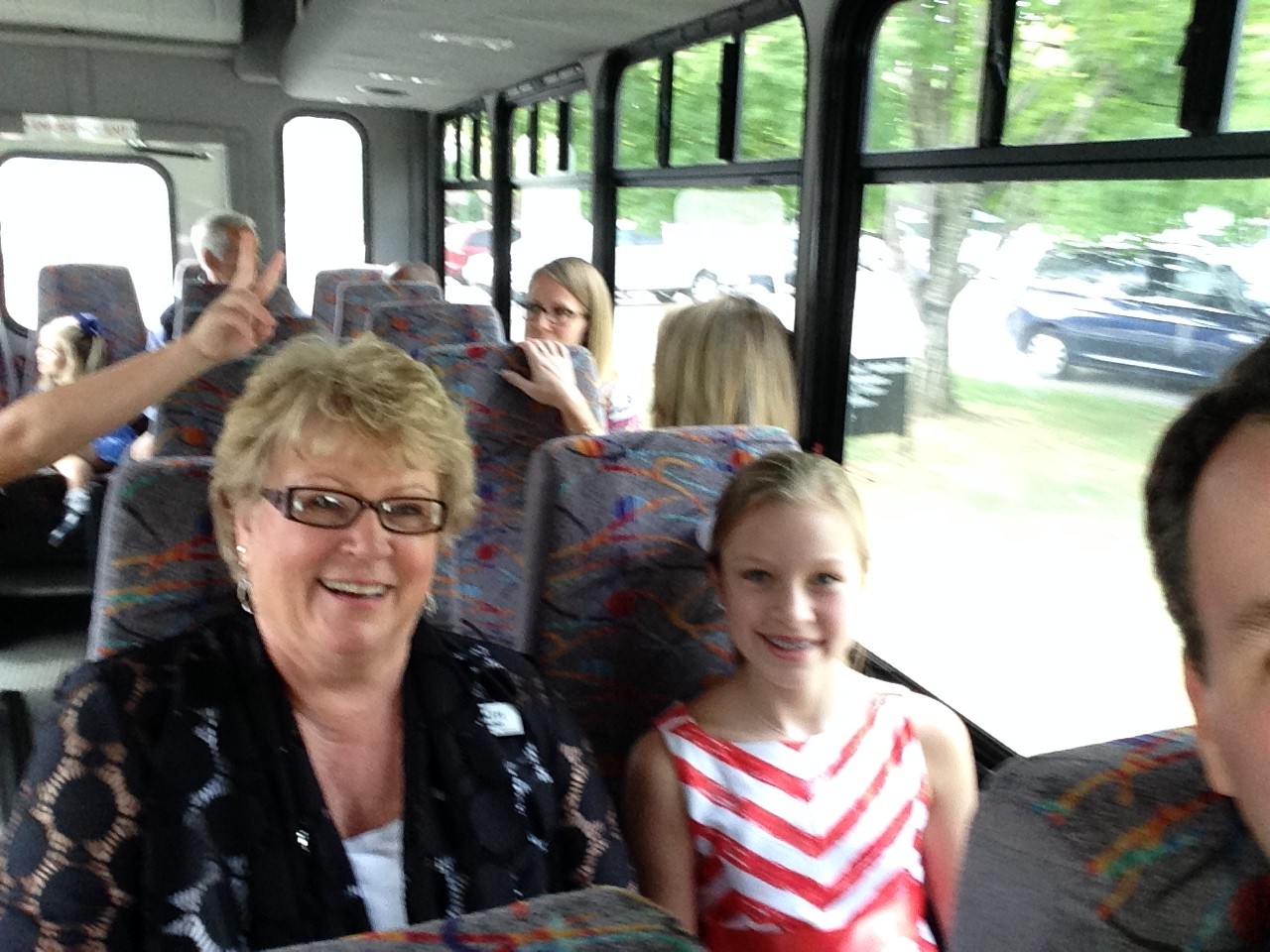
Our church does not have enough parking, so we have a shuttle that runs from a nearby parking lot. Recently, I was sitting in front of Addie, a sixth grader who I know well. She was sitting by herself until Patti and her husband got on the bus. Most of the seats were filled, so Patti asked Addie if she could sit with her. Addie (being a polite teenager) said “of course” and what transpired over the next seven minutes on our short commute to our cars was significant.
Patti asked Addie’s name. Hearing her name, Patti realized that Addie must be her friend’s Alex and Susie’s granddaughter. Because she knew the family, she asked if her dad was Scott or Paul. Patti shared that she had taught Addie’s dad and uncle in Sunday School when they were little. She told her how much trouble her Uncle Paul (now a youth minister) used to get into when he was little. Patti asked Addie where she went to school, what subjects she enjoyed, and what programs at church she was active in.
This short conversation was significant. In a church where age level programming is a part of every facet of church life, Patti and Addie now know each other’s names and have a connection. They have ridden the bus together many times before, but now things are different. A few minutes from a loving adult poured into a young person’s life has the power to be a transformative act in his or her life. An introduction on the bus can blossom into a relationship between two generations.
Sitting in front of them, I was totally distracted and eavesdropping on their conversation. I even tried to sneak a picture of this significant moment, but they caught me.
 Intergenerational Ministry doesn’t have to be hard. Actually, it is probably best when it is easy. Here are some ways to keep it simple:
1. Wednesday Night Dinner Mix-Up: What if at the next church dinner or meal, the youth ministry intentionally sat at different tables in pairs and got to know the others who joined them. Some churches have made this a once a month tradition.
2. Joint Sunday School: What if you invited one of the adult Sunday School classes to join the youth for Sunday School? Then, develop a lesson that allows youth and adults to share their faith stories and understanding of God.
3. Friends in Faith: Many of our churches’ confirmation programs have Friends in Faith or mentors who walk with a youth through that process. What if we asked those adults to make that commitment throughout the students’ time as a youth and college student? They have already started that relationship. Why not keep it going?
4. Joint Mission Projects: What if the Men’s Group and the guys in the youth group did a mission project together? You could pair them up to serve together. Powerful relationships, mentoring, and faith modeling will take place as guys young and old work alongside each other. (It doesn’t have to be just guys or just girls.)
The Sticky Faith research tells us that the most significant factor on youth having active faith outside of high school is significance adult relationships outside of their parents.
Patti and Addie’s conversation seems small, but not if it continues.
What are some ways that your church has made intergenerational ministry easy?