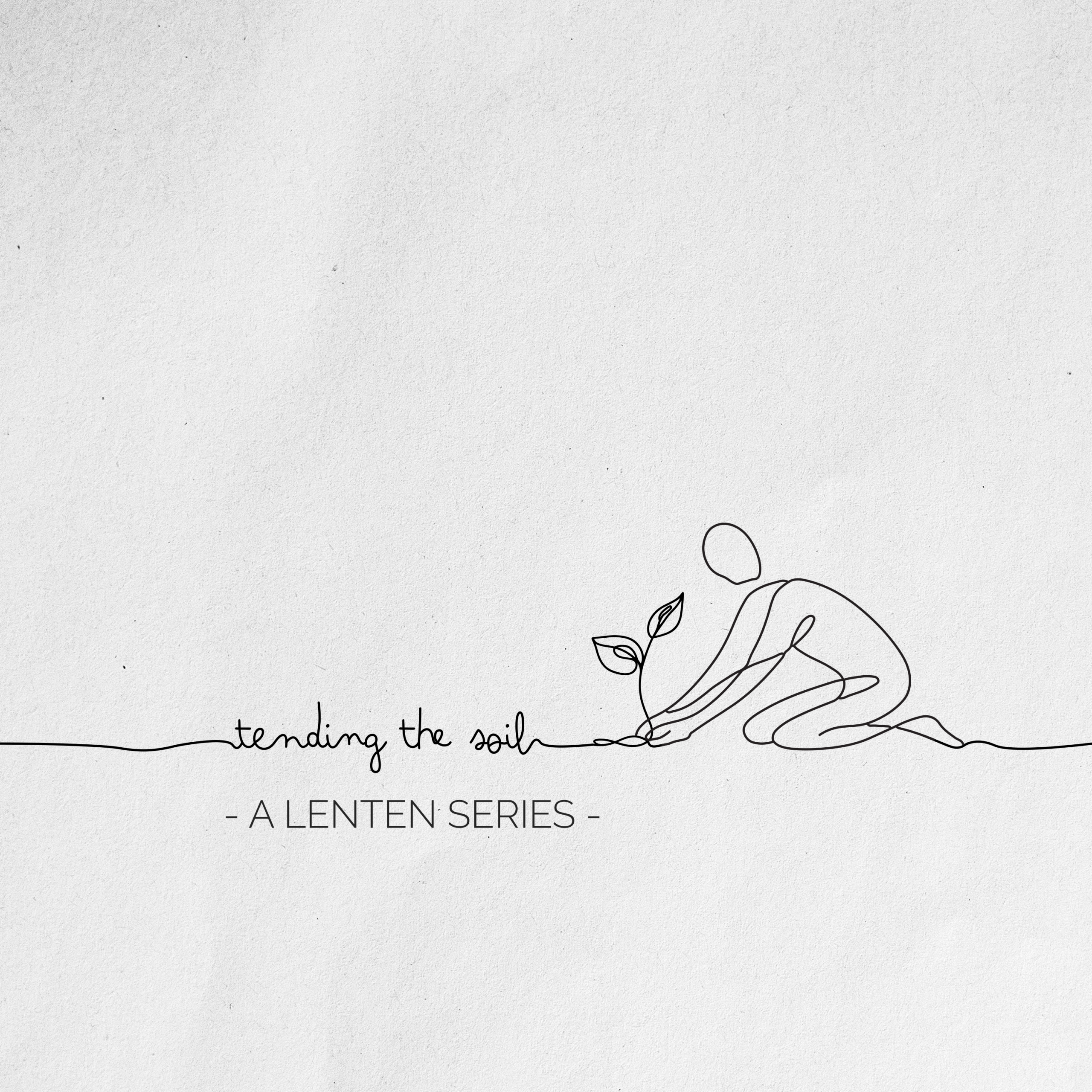
Lent is all about getting ready for new life—kind of like spring training for your soul. The word “Lent” actually comes from an old word about the days getting longer as spring approaches. But nothing grows in spring unless the soil gets some care first.
That’s what this six-week series is about: tending the “soil” of our lives so God can grow something good in us. We’ll look at the life of Jesus and explore simple spiritual practices that help us clear out the junk, make room for growth, and get ready for the new life God is already growing underground.
Details:
$75.00
Week 1—Preparing the Soil
Like planting, in life we often give ourselves a lot of credit—believing that growth is mostly the result of our effort, our timing, our care. We till the soil, choose the seeds, water faithfully, and wait for something to emerge, and it can feel it’s all our work that makes it happen. But planting tells a deeper truth: long before we arrive with our tools and intentions, something has already been at work. This lesson invites participants to explore how God’s story did not begin with us, yet has always been unfolding for our good. From the very beginning, God has been at work—creating, sustaining, and preparing the world with intention and care long before we were aware of it. Through this lens, we begin to see our lives not as the starting point, but as part of a much larger story shaped by grace.
Scripture—Mark 1:9-15
Week 2—Planting the Seeds
This week centers on seeds, the things that are being planted in our lives, taking root around us, and ultimately growing within us and the world. In the parable of the sower, Jesus reminds us that seeds are scattered constantly, but growth depends on the condition of the soil. We hold this alongside Peter’s declaration of Jesus as the Messiah in Mark 8, where something true has taken root even if it is not yet fully formed. Like Peter, we are in process. Seeds of goodness, like faith and truth, are being planted in our lives, and those seeds need time and care to grow. Through Visio Divina, students are invited to slow down and notice what is being cultivated within them, asking with intention: What is taking root in me, and what kind of fruit is my life growing?
Scripture—Mark 8: 27-38
Week 3—Deadheading the Flower
Jesus is clear that good fruit in our lives matters. This week, students will explore what “good fruit” looks like in everyday life, how Jesus responds to “bad fruit,” and what it means to live with intention as people who are shaped to produce good fruit. Through Scripture, reflection, and the example of Dorothy Day, students will practice identifying the outcomes of different beliefs and actions, learning to notice what leads to life, justice, and care for others. They will also be invited to reflect on their own lives, paying attention to the habits and practices that help cultivate good fruit and a deeper connection with God.
Scripture—John 2:13-22
Week 4—Light for the Garden
This session takes one of the most familiar verses in scripture and gives it its full context and due. Students encounter John 3:16 the way they’ve never seen it, inside a bigger, stranger, more demanding story about snakes, light, darkness, judgment, and grace. The Disorienting Dilemma involves reading the scripture in layers, and by the end, students discover that a verse they thought they knew has held much more than they realized. Through reflection and a hands-on deadheading activity, they’re invited not just to think about letting go, but to actually practice it. We are holding tension and exploring how grace and judgment aren’t opposites—coming to the conclusion that being seen by God isn’t something to fear. It’s where healing begins.
Scripture—John 3:14-21
Week 5—Bearing Fruit
This session centers on John 12:20–33 and invites students into reflection where Jesus redefines fruitfulness through the image of a seed that must fall and die to produce life. First, students must identify the invisible fruit others have produced in their lives and then realize they themselves are also shaping others in unseen ways. This creates tension between cultural definitions of impact and Jesus’ definition. The goal is to help students see that their ordinary, often unnoticed choices are already participating in God’s action of drawing people toward love.
Scripture—John 12:20-33
Week 6—An Unexpected Bloom
In this session, students begin by exploring tension between their expectations for the future and the possibility that life may not unfold as planned. They begin by imagining their “dream life,” then are gently guided into considering disappointment, change, and the “death of dreams” as real human experiences that shape identity and hope. This tension is then reframed through the story of Jesus’ Triumphal Entry, where crowd expectations of power and success are disrupted by Jesus’ unexpected path toward humility and suffering. Students will examine how expectations are formed in their own lives, in culture, and in faith, while also learning to notice where seeds of hope and resurrection are planted in unexpected places in their lives. The goal is for students and leaders to leave with a reimagined understanding that God is not absent in unmet expectations, but present and at work in new and unexpected ways.
Scripture—John 12:12-16
Holy Disruptions series are designed to delve into the unique experiences of today’s youth, spark deep theological reflection, and foster transformative discussions. Our three-part methodology empowers students to align with God’s vision and desires for the world.
Facilitate a disorienting experience – where students are most receptive to growth.
Invite students to investigate their reaction to the disorienting moment.
Ask students to explore what God says about it.
Subscribe to receive a monthly roundup of fresh insights and free tools for senior ministry leaders.