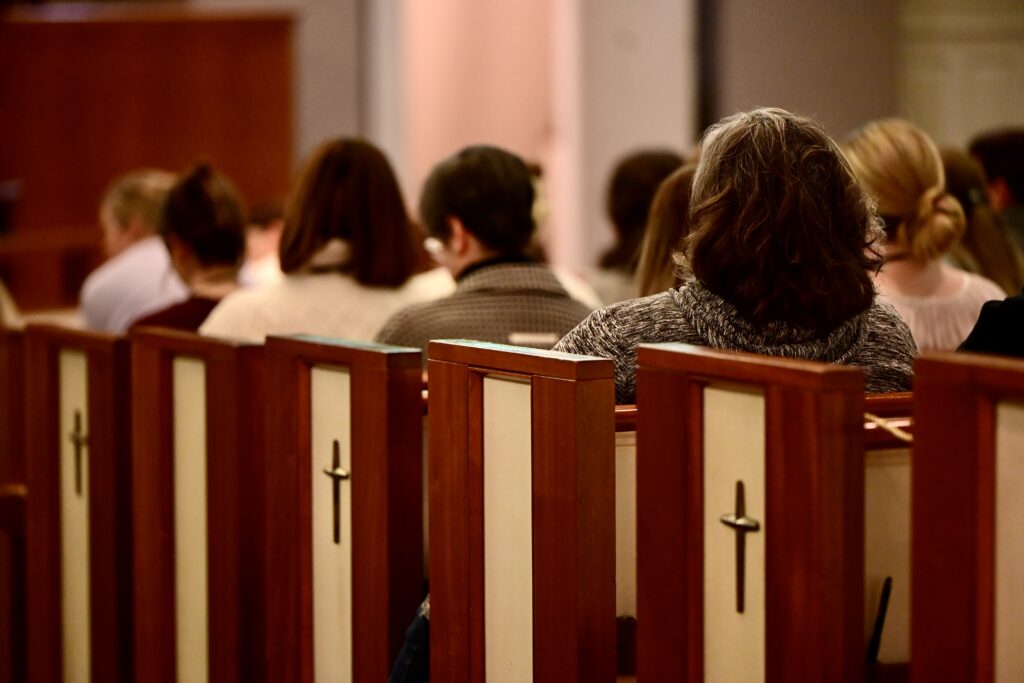
As both a ministry professional and the parent of a young child, I hold two truths at once. I long to see sanctuaries filled with children and their families, where young, old, and everyone in between can worship God together. And yet, I must confess: On Sundays when there is no Sunday school and my six-year-old joins me in the sanctuary, I’m filled with dread, knowing the next hour may be spent listening to the unholy refrain, “I’m booooored,” on repeat.
I imagine many of us sit in this tension. We hope to provide meaningful faith formation for the youngest among us without reducing worship to entertainment. At the same time, we desire spaces that receive a child’s wiggles and giggles, questions and proclamations, not as interruptions to be tolerated but as essential to a truly inclusive sanctuary.
The sanctuary has the potential to be a space where the radical kin-dom of God, in all its diverse beauty, is made manifest—a place where we show up as we are and encounter fellow wanderers on this journey of life. It is an Acts 2 vision, where people of every culture and language come together in mutuality and hear one another’s voices for the transformation of the world.
The church is one of the few intergenerational spaces remaining in North American society, where young and old gather to listen to and learn from one another. But we take that gift for granted when the youngest among us remain on the sidelines rather than being invited into the conversation as full participants.
“The church is one of the few intergenerational spaces remaining…where young and old gather to listen to and learn from one another”
In a rapidly changing church landscape, it will likely become more common for congregations to be unable to support a full offering of Sunday school classes. While this is a source of despair for some, it may also create an opportunity to imagine new pathways forward. We can lean into an intergenerational framework for worship as an act of expansive welcome and inclusion.
I’m not suggesting that we simply add more children’s sermons or revamp our annual youth or children’s Sunday. I mean designing worship from the outset with the formation of every generation in mind.
For many mainline Protestant congregations, the Sunday worship service is crafted with an assumed audience: adult members who arrive with a working familiarity with the traditions and practices of that community.
That assumption is rarely stated aloud, but it lives in the scaffolding of the service itself—in what we explain and what we take for granted, in what we name and what we assume is self-evident. When worship is designed for that audience alone, we exclude many others in the room: people seeking to be formed in the faith, newcomers, those returning after years away, and the youngest among us who are still being introduced to the tradition.
In other words, we exclude many of the people whose voices and experiences we hope will become part of our communities.
At its best, the worship service is a holistic and embodied practice of faith formation. Through its liturgical elements, the core values of Christianity become visible. We welcome people regardless of status, pass the peace as an act of reconciliation, confess our collective sin aloud, receive grace we did not earn, proclaim a story that reshapes our identity, and are sent into the world to live what we have practiced together.
Then we return and practice again, trusting that these forms are forming us into people who more fully reflect the love of Christ in the world.
My son is not bored because worship is inherently boring. He is bored because no one has invited him into what is happening. And, if we are honest, many of the adults have not been invited either.
The church has often been a poor communicator when it comes to naming what the elements of worship teach us about who God is, who we are, and how we are meant to live in relationship with God, one another, and the world. We assume the meaning is self-evident. As a result, people may learn the familiar motions of worship without encountering the theological depth beneath each moment.
“My son is not bored because worship is inherently boring. He is bored because no one has invited him into what is happening.”
Intergenerational worship shifts the center away from the presumed audience. Done well, it becomes an act of accessibility for participants of every age. It does not lower the theological bar. Instead, it refuses to make fluency the price of admission.
Worship is often one of the hardest things to change in a congregation because its established rhythms and routines are deeply sacred to many people. But incorporating intergenerational practices does not have to be an all-or-nothing undertaking, nor is there a single approach that will work for every church.
Congregations can move toward more intergenerational worship one step at a time, adapting these practices to their own communities.
“Not every moment of the service needs to be designed for every person. But every service should hold meaning for every member of the community.”
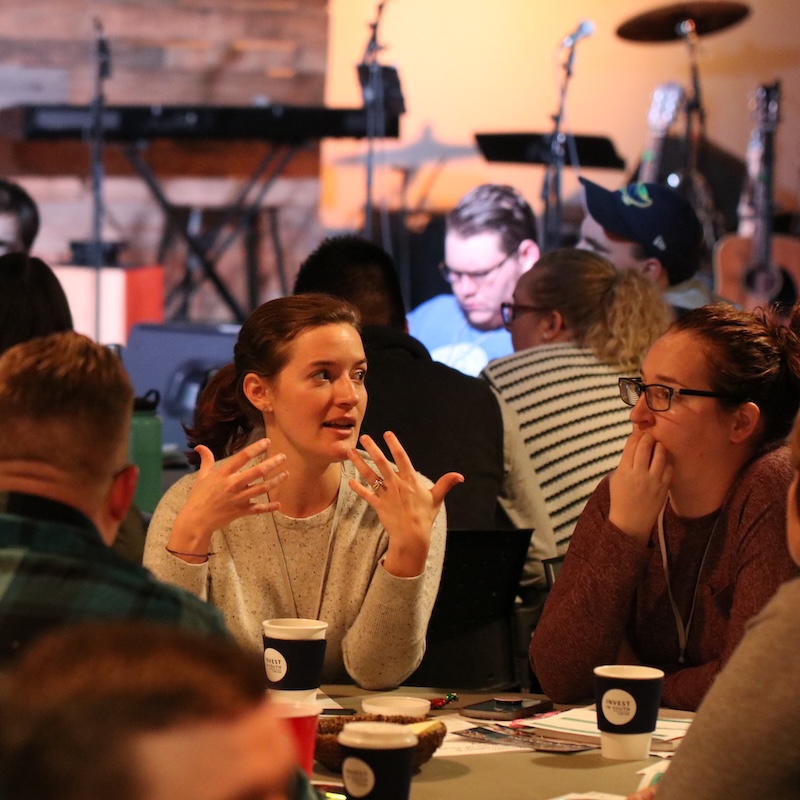
Invite members of the congregation into the work of proclamation. This might include preparing for a sermon through a text study with a small, intentionally selected intergenerational group that includes children.
Additional voices in the preparation process can help leaders notice where the Spirit is moving within the congregation. It can also create opportunities to feature the insights of the church’s youngest theologians in the sermon—and perhaps even list them as co-authors.
Worship should engage more than the mind. It should involve the body and spirit as well.
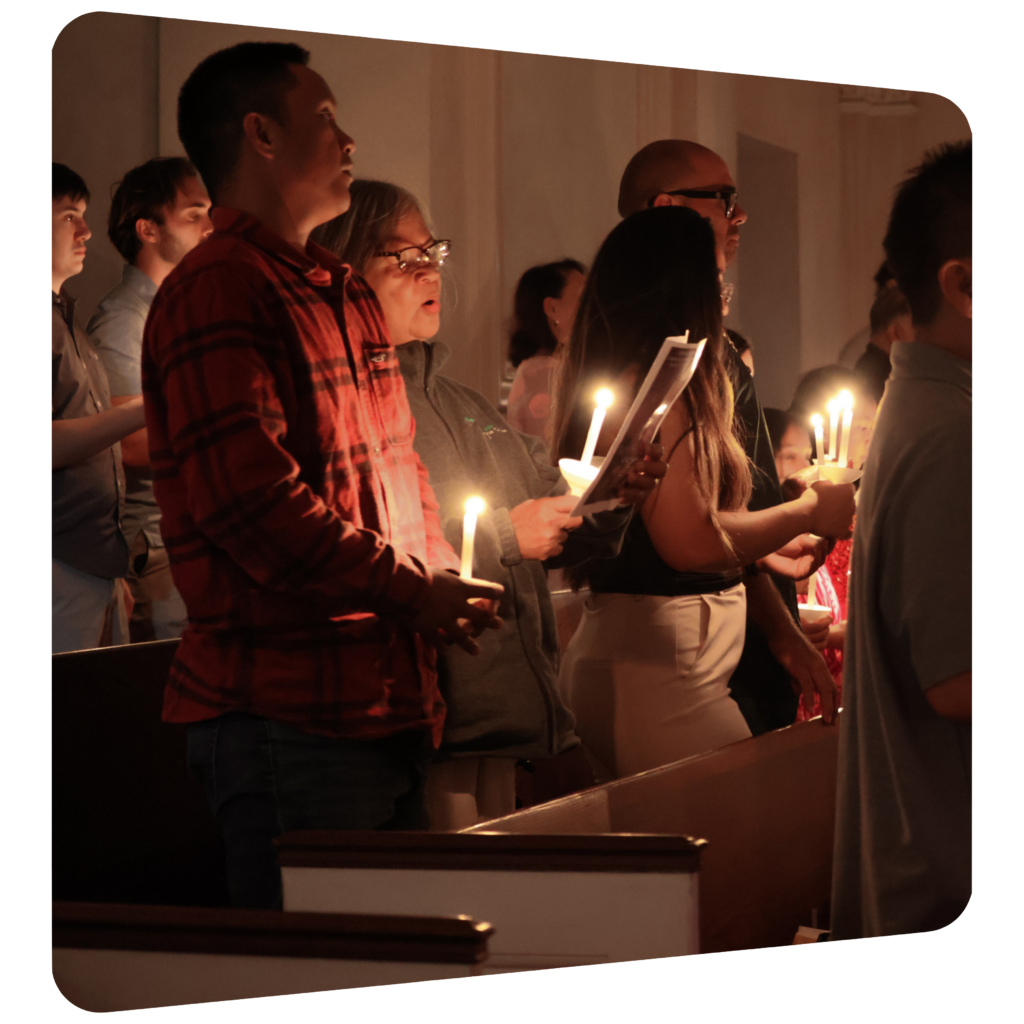
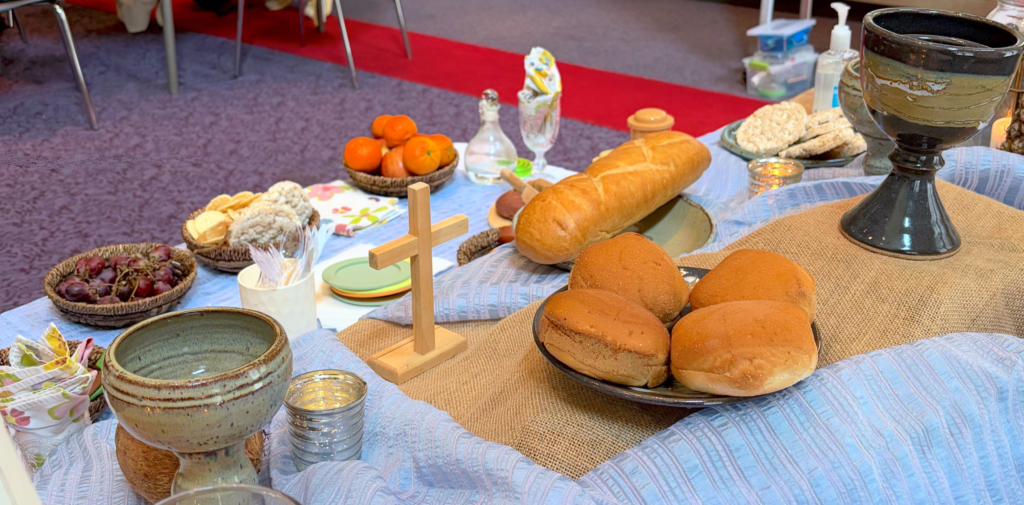
Consider adding hand motions to a call to worship or incorporating an interactive activity that invites tactile participation. When there is something to touch, hear, see, or taste, a four-year-old and a seventy-year-old can enter the same moment without needing a shared vocabulary.
As you introduce sensory elements, remain attentive to the particular needs of your congregation, including neurodivergent participants and people with limited mobility. Accessibility requires more than adding activity; it asks us to consider who may still be unable to participate.
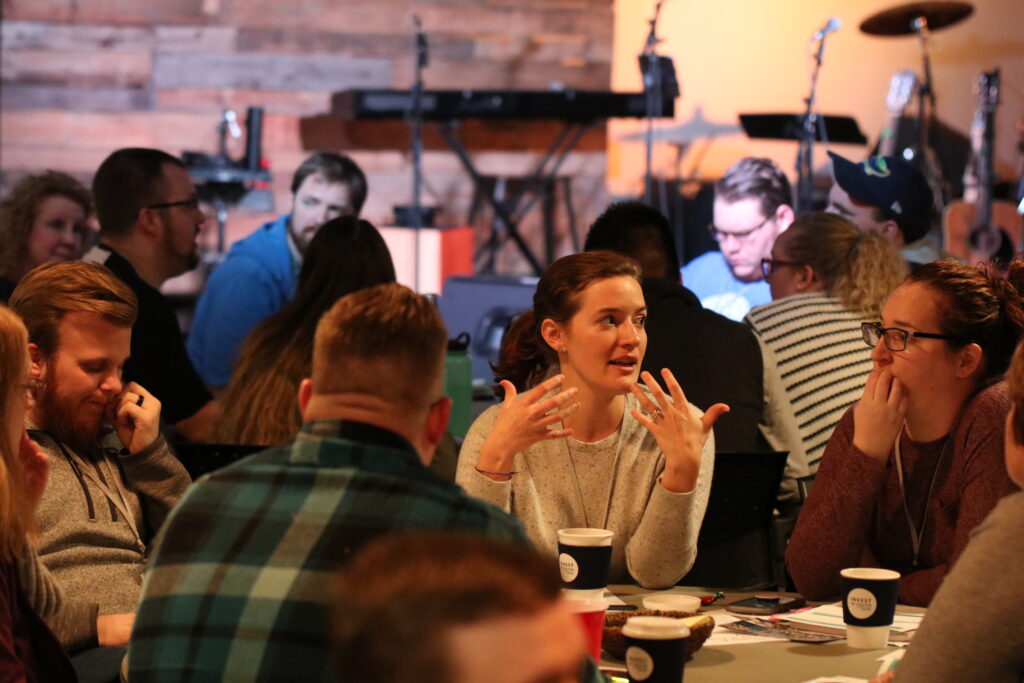
Information does not have to flow from the pastor outward. Build room for the Spirit to move among the congregation through a brief turn-and-share, a moment for testimony, or a question that genuinely expects an answer.
Be intentional about creating space for the voices that hold the least power. Otherwise, the room will naturally default to those who are already most practiced and comfortable speaking in it.
Some of this work is cultural rather than liturgical.
Talk openly with your congregation about welcoming the sounds and movements children make. Consider placing a prayer ground or focus table near the front of the sanctuary rather than hiding it in a back corner.
Help the congregation move beyond the instinct to stare when a child makes noise. Instead, invite people to recognize children’s voices and movements as invaluable expressions of the church’s identity.
These practices should not become performances. Their purpose is to incorporate people of every age more genuinely into the worship experience. Not every moment of the service needs to be designed for every person. That is okay. But every service should hold meaning for every member of the community.
It is also okay to feel mildly uncomfortable in worship, especially when that discomfort comes from lowering barriers for people who have historically felt disconnected from what is taking place.
My hope is that, through small and thoughtful changes, we can build churches that embrace the whole body of Christ in their midst—wiggles, giggles, questions, proclamations, and all.
Looking for a practical place to begin? Download Ministry Leadership Center’s free World Communion Sunday resource to inspire more meaningful intergenerational worship in your congregation.
About the Author—Rev. Dr. Sara Tillema holds an MDiv from Princeton Theological Seminary and a PhD in Religious Studies from UC Davis. She is trained as a sociologist of religion, with a research interest in American religious culture. Ordained in the PC(USA), she has served in college and camp ministry settings in CA, NV, and NJ. She loves walking with young people as they explore life’s big questions and discover how faith and passion can spark meaningful change.