What if the young people in our ministries do not need one more thing to attend, achieve, or accomplish, but a space where they can simply be reminded that they are loved?
Prior to joining the staff at MLC, I worked in a church that participated in the Ministry Transformation Lab—an MLC program designed to help ministries move from struggling or just surviving toward becoming truly transformational. Through six months of interviews, listening sessions, asset-seeking, and intentional study of both our congregation and the surrounding community, my team developed the following issue statement as we discerned the future of our work together:
“Young people today face mounting loneliness, anxiety, and uncertainty about the future, driven by academic demands, social pressures, and the constant noise of social media—and these forces often pull them away from authentic connection with each other and from the support of their faith community.”
Loneliness. Anxiety. Uncertainty. Pressure.
As a youth ministry leader, I remember reading that statement and feeling all of those things deeply. Not as a young person who was dealing with the mountain of pressure that we try to cram into adolescence, but as a person running a ministry who felt like she was underwater all the time, trying to keep every ball in the air and take care of so many things that were never actually mine to carry.
Beneath the surface of that stress and anxiety, there was this belief that I was the one who had to make everything happen. I wanted to carry the full weight of the ministry because it made me feel important. That is not ministry, but a burden I had constructed for myself.
Maybe you have found yourself in a similar space. May I suggest that Sabbath is actually a faithful response to both the problems our young people face and the burdens we, as ministry leaders, carry.
During my time in ministry to teenagers, one of the most consistent frustrations I have heard—from myself and from nearly every youth minister I know—is that families are often pulled in many directions when it comes to getting their students to church. We plan, we reach out, we try new things, and we still find ourselves losing ground to soccer games, Scout meetings, band practices, and a hundred other competing commitments.
In the eyes of many parents and caregivers, extracurricular activities offer concrete value to their child’s life. They teach life lessons learned from being on a team, talent development, and can serve as college resume builders. The value of a Sunday morning or a night of youth group can feel harder to quantify.
What my teenagers were communicating when we wrote that issue statement in 2019 was that the pressures of adolescence were not helping them flourish. They were draining them. And that reality forced me to ask a hard question: was our ministry adding to the pressure?
“How was I modeling a life headed toward burnout rather than one rooted in rest?”
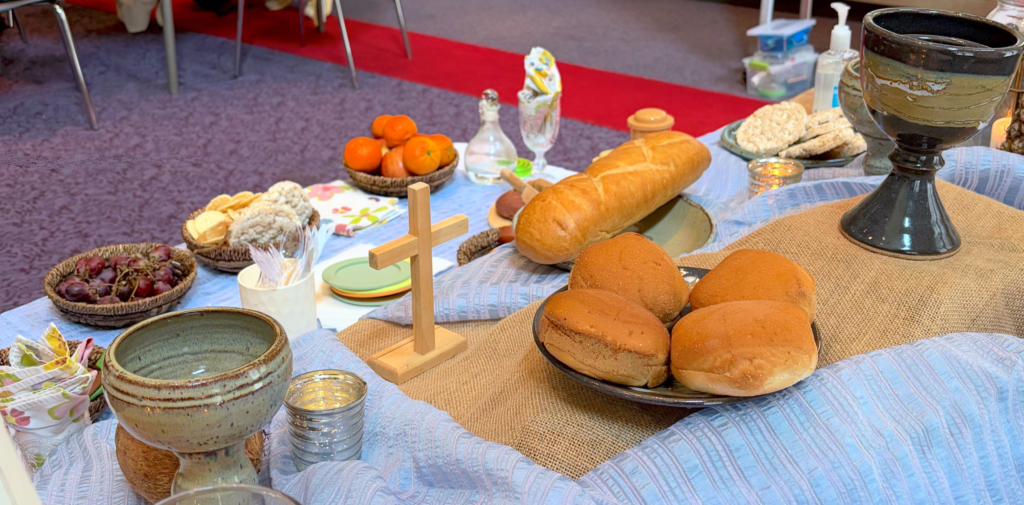
At its best, church should be a sabbath space where our young people can just be, without the constant pressures of performance, achievement, efficiency, and expectation.
The story of Sabbath starts in the first creation story in Genesis, woven into the fabric of creation itself. After forming the world and everything in it, God doesn’t simply stop with the creation of humans. God continues the act of creation by establishing the Sabbath as an intentional and sacred day of rest. And here is what is so striking about that moment: the newly created humans had done nothing to earn it. They had existed for exactly one day, and yet God creates Sabbath and invites them into it freely, and unearned. If that sounds a lot like grace, it’s because it is.
And Sabbath is just as countercultural today as it was then. Offering our young people a true sabbath space—a place free from performance and pressure—will cost us something, too. It may feel like losing the security that a packed calendar of programming can bring, but the ministry was never about your security. It’s always been about making spaces where teenagers can know how loved they are by God and community.
“Sabbath for thee but never for me” is a terrible way to practice ministry. For a long time, Sabbath became a source of guilt in my life rather than rest. I believed in Sabbath, but I struggled to actually stop. Because the weight of the ministry always felt like too much to set down, even for a day.
What I had to do was take baby steps into rest, because many of us have become so addicted to being busy and feeling needed that slowing down doesn’t feel like relief; it feels like withdrawal. Real Sabbath means looking honestly at the things that bring you life and engaging with them in a way that is less about productivity and more about play.
This is a practice of remembering, in your body, not just your theology, that you were created to love and be loved, to delight and be delighted in, for life abundant, not life scarce.
“Your worth has never once been tied to how much you got done today.”
When we evaluated our ministry through the lens of Sabbath, decisions we had been wrestling with for years suddenly became remarkably clear. The question we kept asking was simple: Does this add more pressure to teenagers’ lives? If the answer was yes, it had to go.
That meant trimming the calendar, letting go of some programming we had held onto out of habit or obligation, and being honest about what was actually serving our youth and families versus what was serving our own need to look busy and productive.
We kept some things, like retreats, but we completely reimagined how we ran them. Instead of over-programming every hour, we made room for teenagers to choose their own adventures and find their own forms of rest. We put phones away—for teenagers and adults alike. Finally, we began investing more intentionally in mental health by teaching skills that supported personal and relational well-being.
Like fish swimming in water, our teenagers and their parents often find it hard to see how damaging the relentless current of achievement and busyness really is. It is our job to push back against the idea that adolescence is solely a time to be exploited for skill development.
But that kind of countercultural leadership has to start somewhere. It starts with us—in our own lives, our own rhythms, and our own willingness to put down what we were never meant to carry. We cannot lead our students into rest we have never found ourselves.
So this summer, take whatever time and energy you have and invest it in Sabbath—not because you need one more thing on your plate, but because this has never been about what you can produce. It is about resting in the truth that, though the work will never be fully completed, you are known, you are loved, and you are invited to rest just the same. And when you have tasted that for yourself, you will have something real to offer your teenagers—not a program, but a life that bears witness to the grace that started it all.
If you are rethinking what your ministry asks of teenagers, Holy Disruptions can help. Its ready-to-use lessons create space for meaningful conversation, spiritual formation, and a way of shaping how young people think about God and the world.
About the Author—Becca Bibee brings 15+ years of experience in children’s, youth, and adult ministry. A graduate of MLC, she holds an MA in Youth Ministry from Memphis Theological Seminary. Becca has led ministries, written curriculum, and facilitated small groups in small, mid-size, and large UMC churches across the Southeast. She’s passionate about creating the tools for youth workers to be in meaningful ministry.
Share


Subscribe to receive a monthly roundup of fresh insights and free tools for senior ministry leaders.